Showing posts with label English. Show all posts

Thursday, January 17, 2013

Spring, Sprang, Sprung?

After an admittedly lazy holiday break (I read a dozen books--it was glorious!), I am back in the classroom.  I am teaching only four courses this semester.  Wait, go back and read that again.  Yes--that's right, only four courses!  It's just so exhilarating!  Before you start to wonder what I'll be doing with all my free time, I ought also to announce that I have been accepted to the University of Birmingham (UK)'s full-time, distance learning PhD program in English Literature and Creative Writing.  I begin my doctoral studies this week!

Now, back to the teaching side of my life.

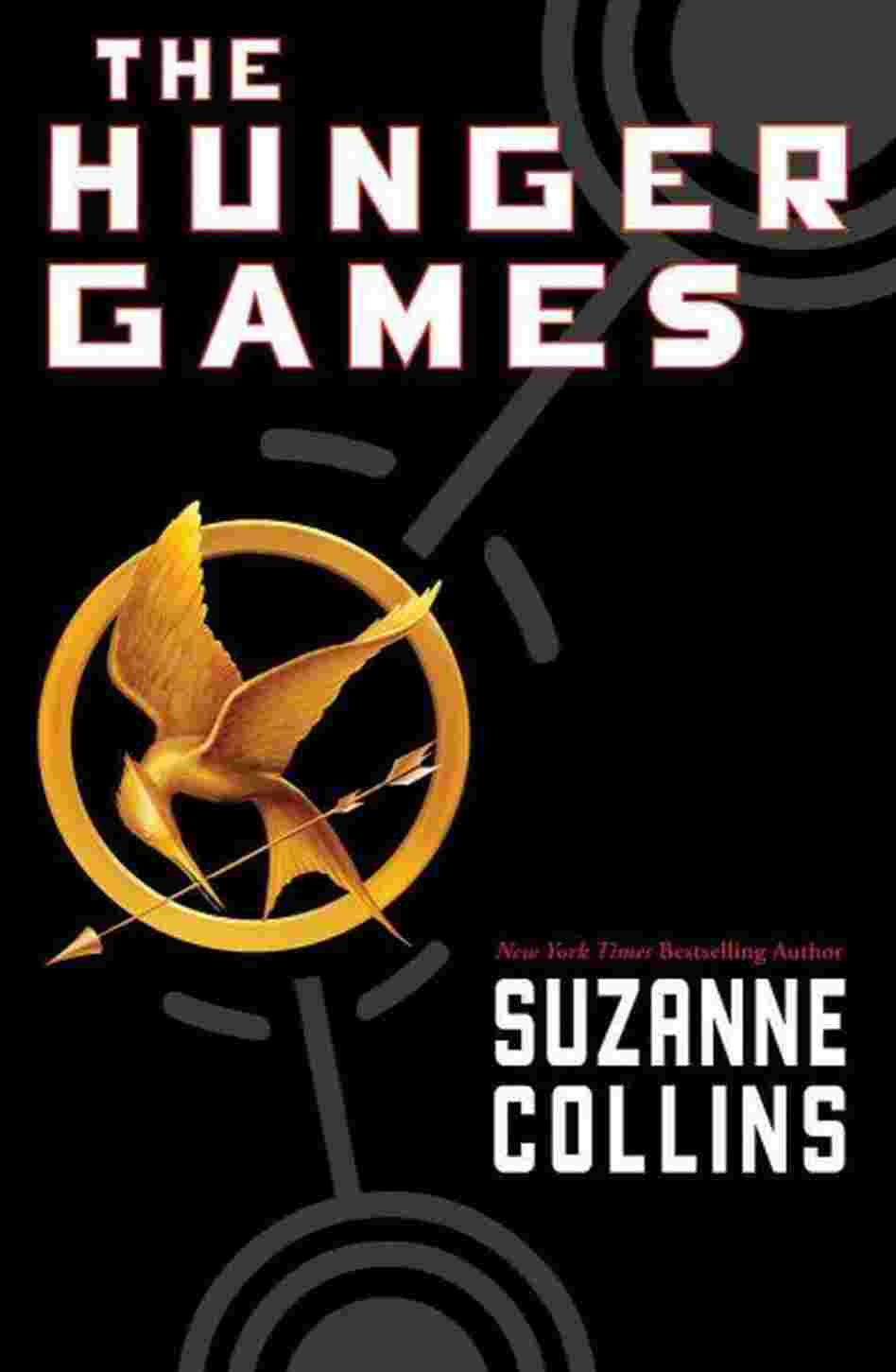
This semester's courses include two sections of ENG 120: Composition, one section of ENG 201: Research & Applied Writing, and one section of ENG 262: World Lit. II (Poetry & Drama).  One of my ENG 120 sections will read The Hunger Games and the other will read Ender's Game (assuming the post office does not lose yet a second order of 25 copies of the novel!).  My one section of ENG 120 in the Fall absolutely loved reading The Hunger Games (and subsequently, watching Jennifer Lawrence rock the screen as Katniss) and pitched a fit when I wondered aloud if I should choose a different book for my Spring sections.  I listened.

Unfortunately, the silver screen debut of Ender's Game is not until November this year (whomp, whomp, whoooooomp...), so I'm not sure what I'll do during the week I will show the other class the film of The Hunger Games--I may just show the movie in both classes.  After all, the novels have similar themes: the use of children by adults, war, ethical and moral struggles, etc. 

I will do my best to post weekly updates...but if I don't, it's only because time will again have gotten away from me.

Thursday, September 27, 2012

Teaching in the Era of YouTube

Today I found myself wondering how teachers ever made it through a school year without YouTube. The answer is somewhat fuzzy, and I believe it involved something along the lines of "V H S." (Whatever that is!) I have implemented YouTube videos into two difference courses this week, underscoring concepts in a way that would not otherwise be feasible within the time constraints of the classroom. While I'll deal with the second use later, I must share this first: ENG 262: World Literature II deals with poetry and drama (World Lit. I tackles short stories and the novel). My students have covered closed and open form poetry, rhythm and meter, sound in poetry, and figurative language this semester. I wanted to broaden their concept of poetry, however, so yesterday I introduced them to John Ecko's and Apollinaire's interpretations of concrete (or shape) poetry and to poetry as spoken word. Shape poetry is fun; it's visual and engaging. Almost every American child learned what a "diamante" (diamond-shaped poem) was back in elementary school. Moving on... Spoken word is new-ish on the scene of poetry in some ways, but in many ways it is the oldest form of poetry. Before man began to write, he spoke. Epics like The Iliad, The Odyssey, and Beowolf were not the only types of poetry--or even literature--to be passed down orally. Poetry has a long and illustrious history as an oral art. If you mention "spoken word" to some older lit. profs, you may hear scoffing, or note memories of smokey coffee shops, espressos, hash and and snaps flicker across the face of your listener. One never knows the secret lives of professors! To introduce spoken word to my students, I begin with this stereotype: students in berets, black jeans, and turtlenecks, sipping gourmet lattes, smoking lazily, and listening intently to an identical speaker at the focal point of the cafe. Snaps can be heard at the finale of the artist's poem, then silence as each digests what he or she has heard, sipping and smoking all the while. My students laugh; this is a scene they recognize from the movies. Good, I've made a connection. I then note that while this is how some spoken word poetry is still delivered, it has become something of a sensation now in the U.S. Poetry slams begin at school levels and end on live, televised, national events introduced by celebrities. Spoken word poetry has always been largely in the first person, dealing with social commentary, pop culture, or personal angst. Having thus introduced my students to and engaged them with spoken word poetry, I turn to YouTube. As an aside, I note that we will watch, then take a moment to absorb each piece before moving to the next. I have good reasons for these pauses, my class soon realizes. First: Sierra DeMulder's "Paper Dolls" We discussed the role of poetry in feminism (and feminism in poetry) at the beginning of the class session, so this connects with the Sexton and Rich poems we've discussed. Students are visibly affected by young Miss DeMulder's condemnation of society's treatment of women, culminating in a passionate call to raped women not to accept society's handling of their "situation." I cried the first time I saw this, several years ago. I had a difficult time keeping everything together in class. Moving on... Second: Joshua Bennett's and Justin Reilly's collaboration "Women" Again, this ties into the theme of women's role in the world and in poetry. Last: Miles Hodges' "Maskless" This affected some students more than others, but none were entirely unaffected. To hear a young black man talk so nakedly, so unapologetically about his fair skin tone on an island where nearly everyone is black and skin tone still matters--even if no one will admit that out loud--was disturbing at a foundational level for many students. Without YouTube, without immediate access to these young poets and their relevant, striking, evocative works, the discussion of spoken word poetry would have been nearly pointless. Not only did students react to the works, but many of them also understood--for the first time--that poetry IS relevant, not just in the classroom, but to the world, to THEM. This poetry moved my students. I cannot take credit for that, but I can take pleasure in knowing that I opened up the world, just a little bit, more for those twenty-five students. Without YouTube, I could not have done this.

Thursday, January 12, 2012

Proofreading for the Obvious

My last section of ENG 120 wrote their Diagnostic Essays this morning. While they wrote, I started grading the first section's essays...suffice to say, there is a reason why they are in my Composition course!

In the midst of scraping my poor eyeballs over the essays, it occurred to me that instead of merely handing out my "Professor G's Proofreading Notation" sheet and blabbering through the whole thing in class this semester, I should make the kids work for it. Okay, so that sounded quite a bit harsher than I meant it to sound, but, it's fairly clear to most people that the more effort a student puts into a particular project, concept or lesson, the better she learns it.

So. I am going to split up my fresh-faced little butchers of the English language into groups of 3-5. Each group will have a set of ten questions about the most common knives wielded against proper English grammar:

1. What is a 'fused sentence?'
2. What is a 'run-on sentence?'
3. What is a 'comma splice?'
4. What are the eight (8) parts of speech? (side note: I do not allow students to use questions or exclamations in academic writing unless it is part of a quote).
5. What is 'verb tense?'
6. What is 'subject-verb agreement?'
7. What are 'transitions?' Why do we need them?
8. What is a 'sentence fragment?'
9. How many sentences are in a paragraph? (I constantly battle that horrid habit middle and high school teachers ingrain in my students' heads that a paragraph is five sentences--this is flat-out not the case at the college level).
10. What is a 'thesis statement?'

I realize that all these questions are dry as overcooked chicken, but there is a method to my madness here: because these are my students' most common mistakes, it behooves me to find out now, at the beginning of the semester, if they even know what they are. If they do, great, we immediately dive into how to recognize, avoid and fix them in the future. If, as I suspect, they haven't a blessed clue what they are, we will start with creating an attainable explanation for each and do some more basic grammar work.

Obviously the last two questions are a bit of a different animal, but as students in each of the three ENG 120 sections asked me, "Is it okay that I included the thesis statement in the Introduction instead of writing it by itself?" over the last two days, I'm pretty sure this will be fruitful.

(And not to leave you out, dear readers, I will be sure to post the most witty, clever and asinine responses to all of the above. There is a problem in our English language teaching methods and it will help all of us to understand what the heck is going on inside those eighteen-year-olds' heads!)

After we've done the group questionnaire, we will check each group against the others and come up with common definitions for the terms for which that is appropriate. Then, I will give the students their essays back, along with my Proofreading Notation sheet. Commence the scavenger hunt! Each student will have to find an example in his or her own paper of the notation as we go through the sheet. (For example: // for parallelism, so the students will be looking for a place where they had a parallelism issue in sentence structure).

More to come tomorrow...
Wednesday, January 11, 2012

Week 1

Monday, January 9th: 85% of my registered students attended the first day of class. We went through the usual motions of going over the syllabus and I went through my usual speech about having ZERO tolerance for plagiarism and the necessity of attending class (and owning the textbooks).

Wednesday, January 11th: All ENG 120 students are writing their "Diagnostic Essay" in class today. Two sections of the course meet on MWF, so the classes only meet for 50 minute sessions. This means I will receive a batch of largely unfinished essays; I'm okay with this as I'll be grading them and handing them back for revision anyway.

Friday, January 13th: At the moment, the plan is to field any questions about our Blackboard page (I am piloting the new version of Blackboard Learn for all my classes this semester), their blogs (instead of handing in typed, printed journals each week, my students are keeping a blog this semester), or any other housekeeping issues. Once that is taken care of, I'm going to split the class into groups for a series of short "Getting to Know You" activities built around language and vocabulary. I have a few I'm considering right now, but I haven't decided yet which ones I'll really use (Stand by!).

On a slightly different note, I receive an email every day with a quote by an author from Goodreads.com. Today's quote:

After all, reading is arguably a far more creative and imaginative process than writing; when the reader creates emotion in their head, or the colors of the sky during the setting sun, or the smell of a warm summer's breeze on their face, they should reserve as much praise for themselves as they do for the writer - perhaps more.

- Jasper Fforde (author of The Eyre Affair)

I found this rankled me a bit--but only just a bit. I do believe that reading is a creative process, and as I read, I follow a sort of mental cinema, complete with color, voices, accents, fashion, etc. I truly feel sorry for those who do not experience this vivacity when reading. However, as an English Composition professor, I must insist that this same creative, sensory process is necessary for writing (I doubt anyone would debate that). The problem with many students (and adults) today, I would posit, is that they never learned how to read with this level of engagement and commitment, hence, they also cannot write in vivid, real language. This can't be allowed to continue!

Tuesday, January 10, 2012

The Beginning

For years I have joked that I am "ADD." I am acutely aware that this is, in fact, a very serious epidemic affecting multiple generations now, and I do not take it lightly. The truth is, I am not ADD, and while I occasionally get distracted (should I make more coffee?), for the most part, I focus rather well on just about anything (except for faculty meetings).

Depending on who you ask, the average attention span of a typical adult is anywhere from 5-8 minutes. All the sources of these statistics do agree on one aspect: that timeline is shortening--rapidly.

English classes range anywhere from 45-75 minutes, so how am I supposed to engage 20 non-Liberal Arts majors for longer than 5 minutes? Putting aside my own ego and belief that I am, quite certainly, the most entertaining English professor any student could ever wish for, I realized I had a problem: What happens for the rest of the class time if I only get 5 effective minutes?

Recently, both The Chronicle and Inside Higher Ed (as well as other publications, I'm sure) have pointed at and discussed the flaws in lecture classes. The result of these discussions is hard for us higher education teachers to hear, but it rings true: students just don't learn effectively from lectures. Ouch. So what good am I, then?

Then, the aha moment: I will no longer lecture. Read: I did not say I will no longer talk. I really do enjoy the sound of my own voice, and I think I have fabulously useful ideas to share, so I will not shut up. But, I will talk less, and seek more interactive and small-group ways of working with my students.

The Spring 2012 semester began yesterday. I have three sections of ENG 120, totaling about 65 students. Let the experiment begin!